Music from bamboo and fruit from wood.
1 year ago
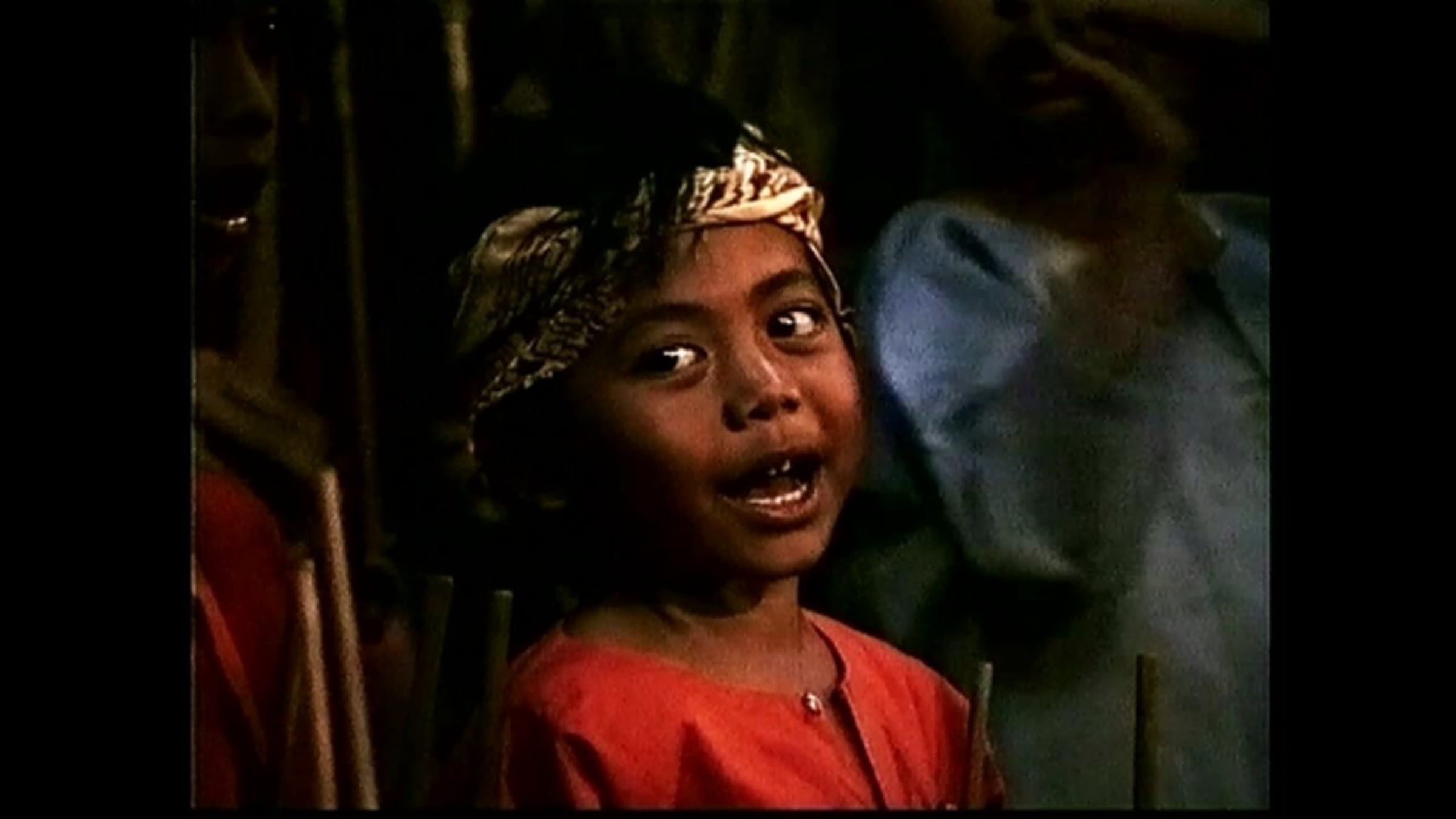
The Anklung is a typical bamboe musical instrument made from carved bamboo tubes hung on a bamboo frame, and are shaken to produce notes. We visited this music school during our Indonesian videosafaris in 1987- 1990. We also visited the many fruit factory makers! Not for consumption! :-)
Bamboo musicians from Bandung Indonesia united to protect both their music and the versatile plant against a Malaysian proposal to register the angklung as “Malay Bamboo”. Satria Yanuar said Saung Angklung (Children School) had made strong efforts to popularize angklung music and to promote it among foreigners who visit the West Java capital. Many are interested in buying the instruments, which are seldom seen overseas. But these efforts to strengthen the image of Indonesian angklung will be in vain if Malaysia is able to register the instrument as “Malay Bamboo”.
Another product of the amny art artists in Bali is woodcarving and making loads of fruit from wood. Many families produce thousands which are sold worldwide and are laying in many fruitbowls!
Bamboo musicians from Bandung Indonesia united to protect both their music and the versatile plant against a Malaysian proposal to register the angklung as “Malay Bamboo”. Satria Yanuar said Saung Angklung (Children School) had made strong efforts to popularize angklung music and to promote it among foreigners who visit the West Java capital. Many are interested in buying the instruments, which are seldom seen overseas. But these efforts to strengthen the image of Indonesian angklung will be in vain if Malaysia is able to register the instrument as “Malay Bamboo”.
Another product of the amny art artists in Bali is woodcarving and making loads of fruit from wood. Many families produce thousands which are sold worldwide and are laying in many fruitbowls!
-
Vimeo: About / Blog / Developers / Jobs / Community Guidelines / Community Forums / Help Center / Site Map / Merchandise
/ Get Vimeo

Previous Week
Just a curiousity, why did you up-convert SD video into HD? Do you get any quality gain via Vimeo if you do that?
Jan, what do you mean by Vimeo translating DV to HDV? Did you not render your DV video to 720p using your NLE first? In that case your editor does the conversion (with pillar box and all). The question is then: is there any benefit for doing that? Because HD uses higher bandwidth but your video is still at SD resolution.
That lyric in Indonesian goes like this:
Burung kakak tua
Hinggap di jendela
Nenek sudah tua
Giginya tinggal dua
Letrum letrum letrum mulala (3x)
Burung kakak tuaaaa!!!
Translated :
Old man's bird / Cockatoo
Its perched on my window
Grandma is now old
She's only two teeth left
Letrum letrum letrum mulala (3x)
Old man's biiiird!!!! / Cockatoooo!!
:) Don't we just love simplicity and silliness of nursery rhymes?
Born between Indonesia and Malaysia, and raised as a Javanese, I feel sad to hear the battle between the two regions. Its obvious both wants to profit solely from future instrument sales and copyrights. But it would be a hard one for Malaysia to win if its based on origin.
Genuine good angklungs are still being handmade and exported from Saung Angklung Udjo, Bandung. The word 'angka' (note) 'lung' (irregular) itself is of Balinese origin. Bali here falls into Lesser Sunda Island group.
I remember grandma playing it to me while I was a child. She's from West Java, the true origin of Angklung which is from the Sunda Islands. Saung Angklung Udjo has chronicles true to the origin of an angklung's evolution. Daeng's angklung transforms the pentatonic instrument to a diatonic note scale instrument, which enables it to play plethora of modern songs. Had it not been done in 1937 by Daeng Soetigna, it would have to stay in melodies limited to that of a Gamelan. Simply looking at the build of an angklung, its easy to relate it to other instruments built in that same region. Think shadow puppets, think gamelan, think of percussive instrument. They are definitely not of Malay Peninsula traits but Indonesia.
upload.wikimedia.org/wikipedia/id/2/2b/Angklung.jpg
To make history even more colorful, you can hear the angklung's journey not just into Malaysia and bigger SE Asia but throughout Europe. In Holland, its played religiously during Indonesian events. Thanks to the colonization era that brought some of its 'servants' and influence back into Europe. An angklungs journey has just begun.
And as for the word 'jendela' in the song above, its of Portuguese origin. Yet another fact based on Java's spice history with Portugal.
I'd like to leave this lengthy comment with a Sundanese original verse of this lyric sang by my late grandma. I'll patent that!
Manuk kakek tuek
Menclok neng jendelo
Mbah wedok wes tuek
Untune kerek loro.
Letrum letrum letrum mulala (3x)
Manuk kakek tueeeeeek.
THANKS FOR POSTING MY ROOTS JAN!!
Hope I helped stw254! ; )
Further reads:
angklung-udjo.co.id/
Thanks also for the history of angklung. I did not know that it came from the word angka, which also means numbers (since notes are represented by numbers as in 3 3 4 5, it can also mean notes). I have to checkout the links you gave.
What a rich cultural overview you gave. Recently I went pass a Portuguese church in Boston and on the 'jendela' it says 'gereja.' A few days ago I looked up on Wiki the origin of "kroncong" with the cuk and cak ukeleles. You can probably write another page about that. Is Tante Lien still popular?
I remember hearing extraordinarily complex gamelan music in Bali.
For highlighting this thread.
I love the deep saturation of the video, not something that digital video can do w/o post.
Satu lagi 'Like' untuk anda!