Historic Nuclear Deal Signed

CHAN:
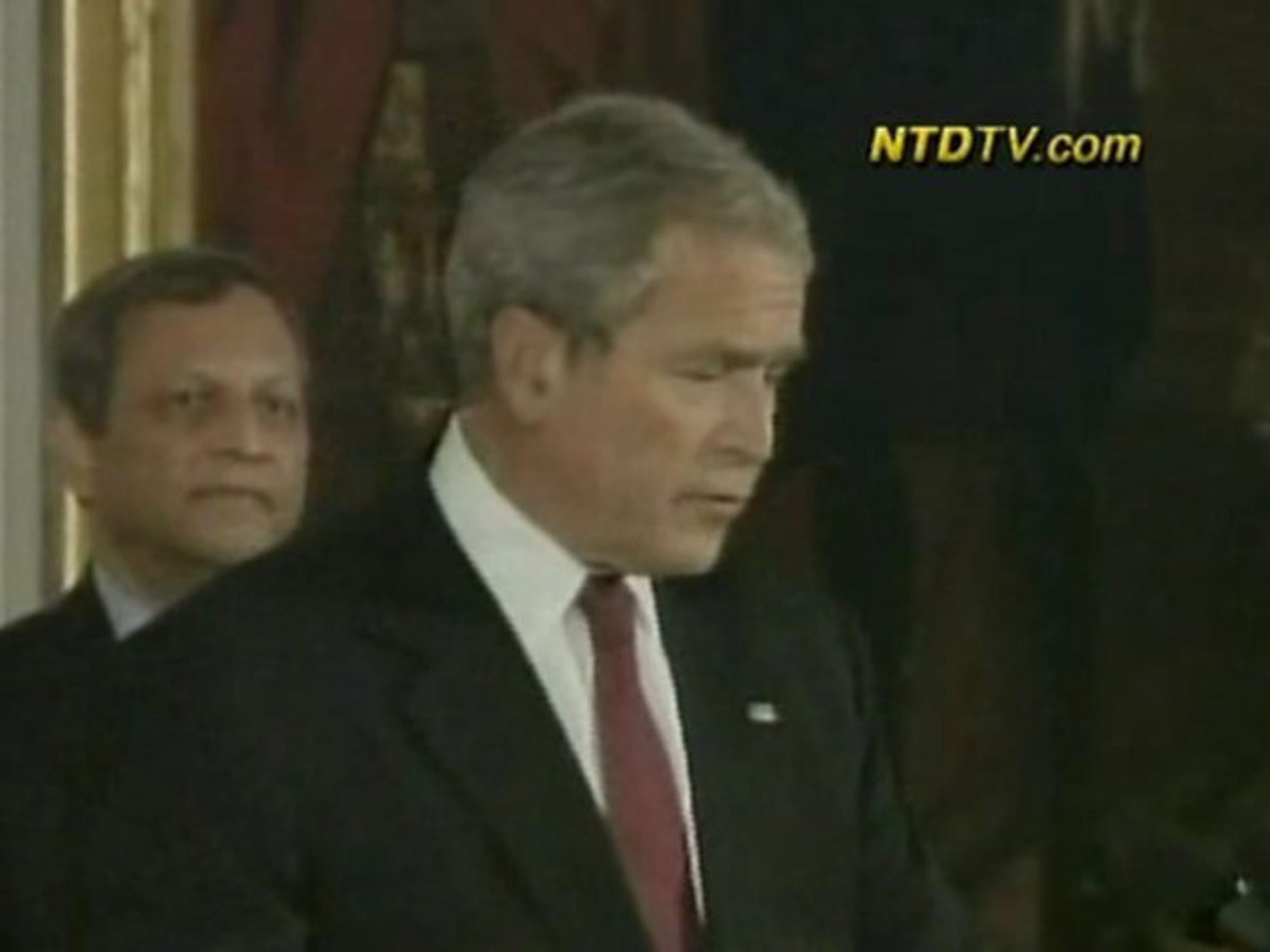
President George W. Bush signs legislation that will allow the United States and India to open up nuclear trade. Bush's action paves the way for the details of the agreement to be signed by U.S. Secretary of State Condoleezza Rice and Indian External Affairs Minister Pranab Mukherjee in Washington on Friday, October 10.
[George Bush, US President]:
"India will continue to build on its strong record of responsibility in operating its nuclear facilities. And India and the United States will cooperate more closely to keep the world's most dangerous weapons out of the hands of extremists and terrorists. The bill I sign today approves the 123 agreement I submitted to Congress -- and establishes the legal framework for that agreement to come into effect. The bill makes clear that our agreement with India is consistent with the Atomic Energy Act and other elements of U.S. law. By passing this legislation, my administration and Congress demonstrate our common view that nuclear cooperation is in the interest of both the United States and India." India's Congress Party says the pact will provide India with access to U.S. nuclear fuel, reactors and technology.
This overturns a ban on such trade, instituted after India first conducted a nuclear test in 1974. But India's left allies are critical of the deal.
[Yashwant Sinha, Bharatiya Janata Party]:
"For all times to come,India has lost it's very right to carry out any nuclear test and no sovereign country should have accepted it."
Critics in the US argue the deal undermines efforts to prevent the spread of nuclear weapons and sets a precedent allowing other nations to seek to buy such technology without submitting to the full range of global nonproliferation safeguards.
Get started for free
24/7 customer support
Our customer support team is available to help 24/7. Enterprise members also receive dedicated account managers and a guaranteed uptime SLA.
© 2026 Vimeo.com, Inc. All rights reserved.
TermsPrivacyYour Privacy ChoicesU.S State PrivacyCopyrightCookies