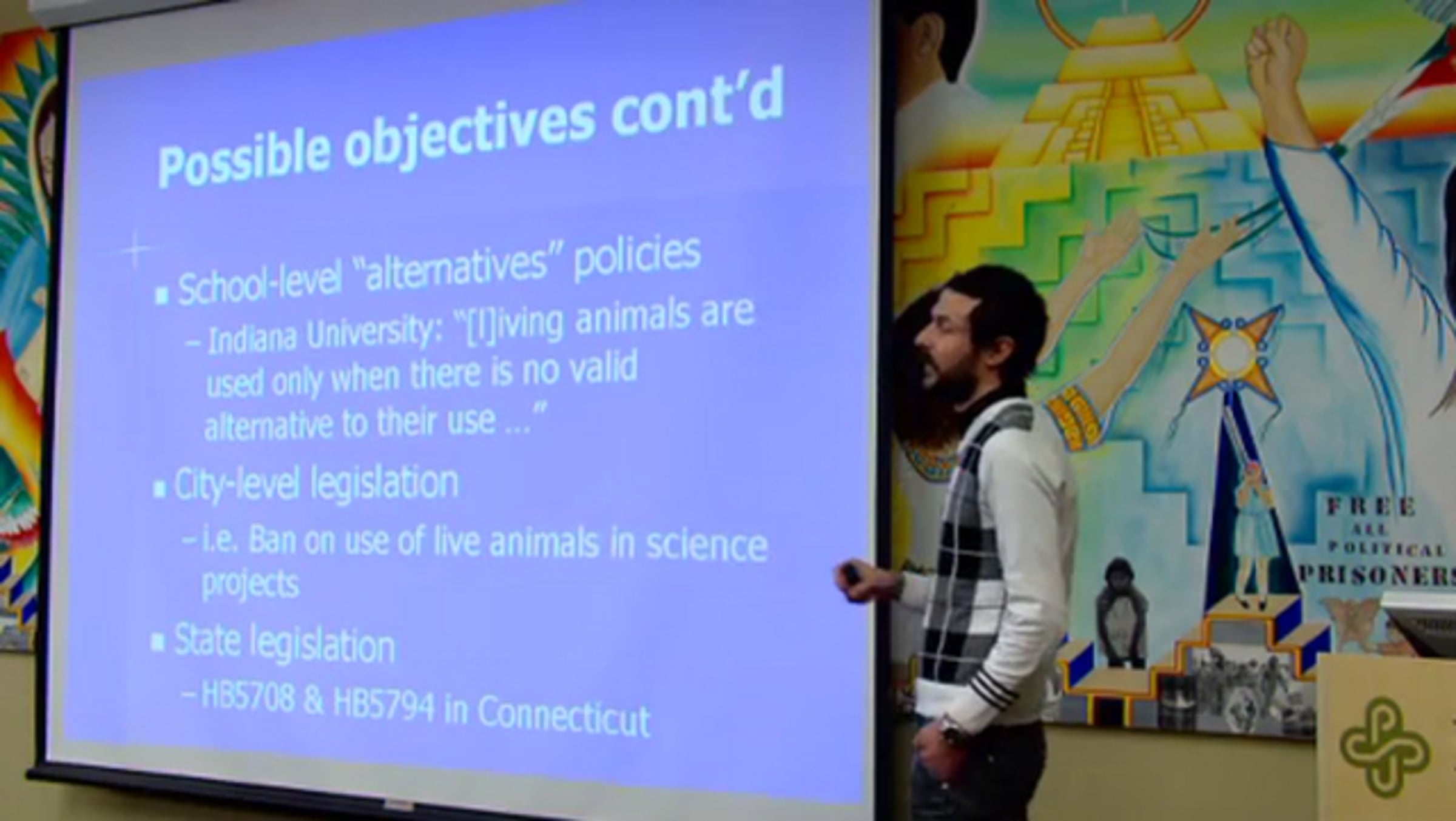
Confronting Classroom Cruelty

Did you know cats are one of the most frequently dissected animals in student laboratories in the United States? It is estimated over 100,000 cats are dissected in high school classrooms each year, and many more being used in colleges and universities across the country.
Classroom dissection, once considered the practice tool of choice for learning anatomy, physiology and the theory of evolution, has exposed greater questions of ethics and cruelty in the classroom. With a notable scientific shift to studying animals in their natural environment, and the advent of sophisticated learning tools, many question: how can we stop dissection in schools?
Justin Goodman, Research Associate Supervisor in the Laboratory Investigations Department at People for the Ethical Treatment of Animals (PETA), will explore these questions and more. As a graduate student, Goodman was instrumental in the campaign to end the use of primate experimentation at the University of Connecticut Health Center. At PETA, Goodman’s focus is on the use of animals in education. Through his efforts, many schools and medical centers across the country have successfully adopted humane, non-animal learning methods.
Get started for free
24/7 customer support
Our customer support team is available to help 24/7. Enterprise members also receive dedicated account managers and a guaranteed uptime SLA.
© 2026 Vimeo.com, Inc. All rights reserved.
TermsPrivacyYour Privacy ChoicesU.S State PrivacyCopyrightCookies