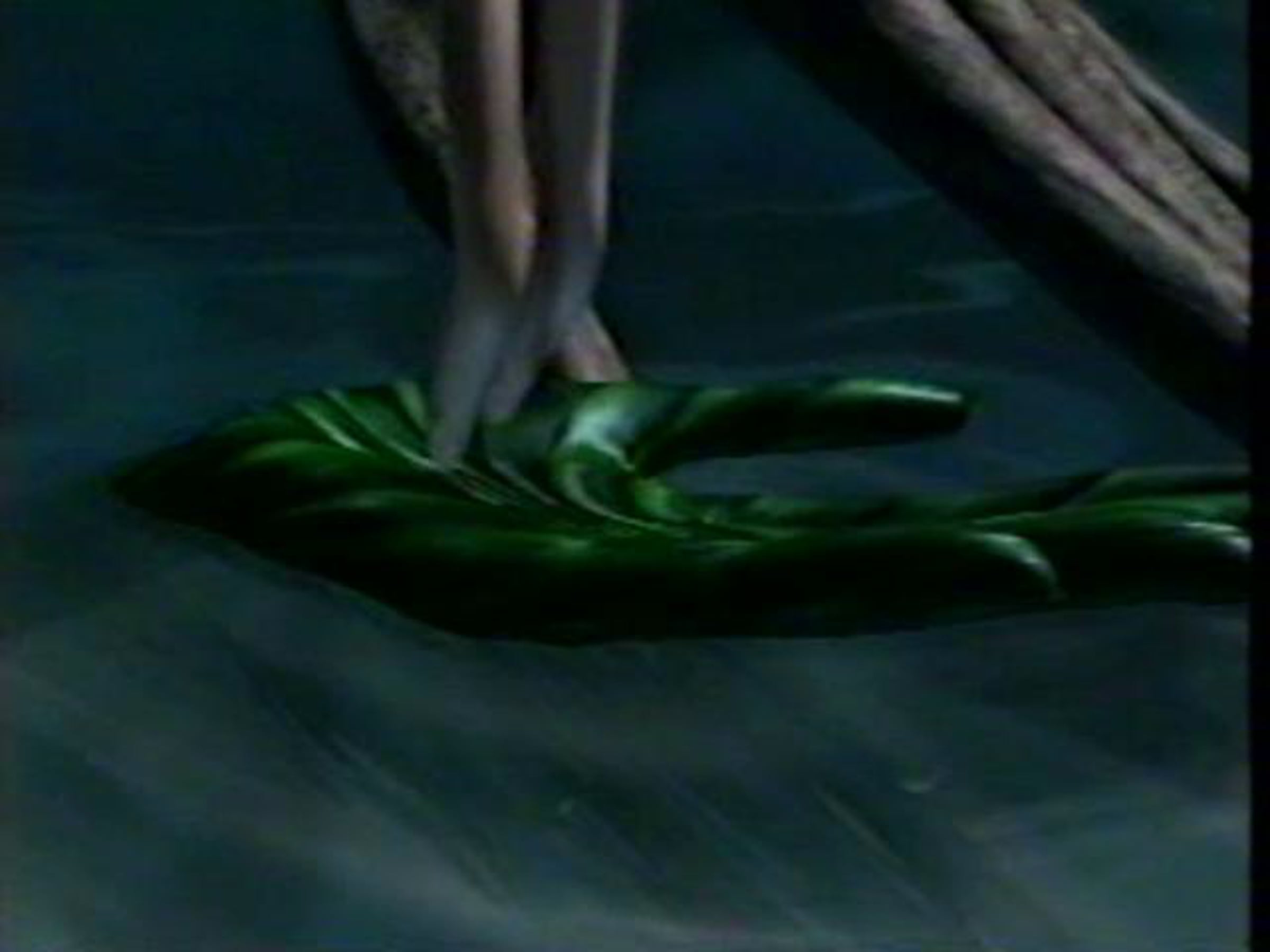
Prix Ars Electronica 1993, "Lakmé" by Pascal Roulin (BE)

short clip from the ORF Documentary about Prix Ars Electronica 1993 showing the computeranimation "Lakmé" by Pascal Roulin who got the Golden Nica for this animation.
(more info at aec.at)
--
Statement of the Computer Animation Jury
Rolf Herken
In distributing the prizes the Prix Ars Electronica Computer Graphics and Animation jury has tried to stick to the basic principles it set last year. Besides the artistic character of the entries, their computer-specificity is the most important measure of prize quality. They should distinguish themselves through images that are specifically related to the computer's role in their creation. This inevitably draws attention to the role of software and, where relevant, to the development of software within the creative process. Among the works submitted there were, in the eyes of the jury, only a few that could be put on the short list for the Golden Nica. This is not necessarily a sign of a decline in quality, or tightened entry criteria. The reason is probably that not enough outstanding recent works have been entered. The Golden Nica was awarded to Pascal Roulin's "Lakme", notwithstanding that in an artistic sense it represents a contrast to the new forms of expression favored by the jury, showing images that are familiar, though perfectly realized by computer, literally animated and surreal.
It was therefore mainly on the criterion of computer specificity that "Lakme" was judged to be worthy of the prize - to a certain extent in recognition of the opportunity provided on the meta level of the software to represenHmagined animated images as they are seen here in the movements and transformations of the hands representing the princess Lakme and her servant Mallika; to the music of Delibes. The fluid transformation of the hands and the associations they conjure up of various animals and their characteristics, as well as their individual beauty and danger of the jungle around them, are highlights of the animation.
The animation of the hands, which carries the film, was brought about by Estelle Chedebois using newly developed animation software. It allows the user to build and animate a skeleton with moving joints, and automatically covers the pre-determined body volume with skin. It also generates extreme complex surface transformations which are controlled by the movements of the skeleton and under the influence of additional user-defined functions, which in traditional methods of modeling and animation could only have been achieved by the most laborious means. This has enabled the animator to concentrate on the fundamentals of the animation; the choreography and transformations of the hands, and to show organic bodies in movements of unattainable complexity and elegance. The software was developed by Philippe Brock and Madeleine Jean for Ex Machina.
Get started for free
24/7 customer support
Our customer support team is available to help 24/7. Enterprise members also receive dedicated account managers and a guaranteed uptime SLA.
© 2026 Vimeo.com, Inc. All rights reserved.
TermsPrivacyYour Privacy ChoicesU.S State PrivacyCopyrightCookies