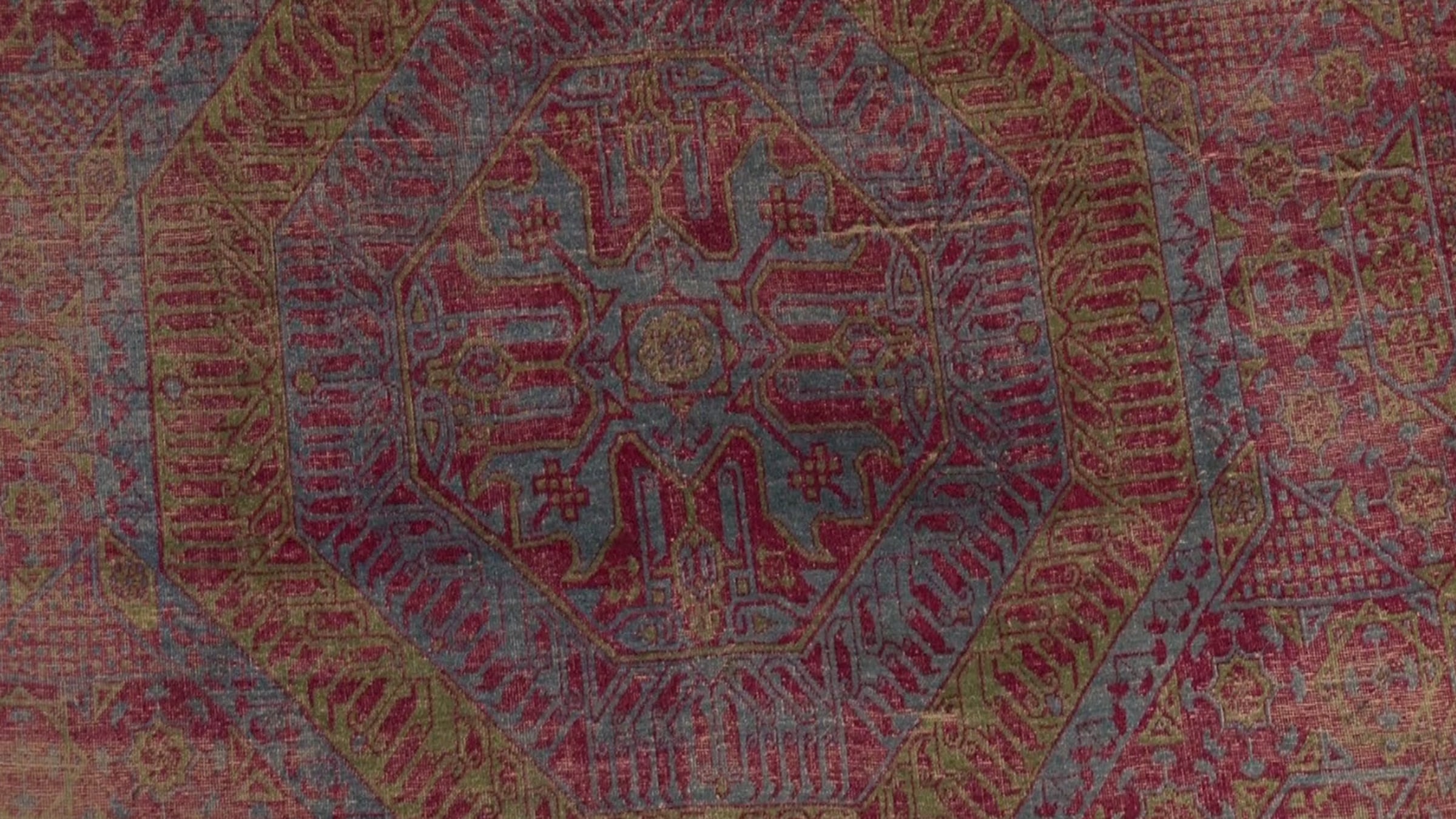
T 8344 Kairener Osmane | Die osmanische Kunst erblüht

Diese Art von Teppich illustriert sehr gut, wie sich die Teppichproduktion Kairos bis ins 17. Jahrhundert weiterentwickelte. Zwei Stücke der Gruppe befinden sich heute im MAK. Material und Farbigkeit der Teppiche verändern sich wenig, dafür aber ist die Zeichnung des Teppichs charakteristisch für die Periode des bildhaften Aufblühens in der osmanischen Kunst, das um die Mitte des 16. Jahrhundert seinen Ursprung hatte. Vergleichbare Tendenzen erkennt man in den Iznik-Tellern und in dem Nischen- oder Gebetsteppich der höfischen Produktion Istanbuls. (Angela Völker/Barbara Karl)
Kairener Osmane
Osmanisches Reich, Ägypten, Kairo, 17. Jh,
Maße: 240 x 205 cm
Kette / Schuss / Knoten: Wolle, asymmetrisch
Knotendichte: 1.360/dm²
T 8344 / 1922, ehemals habsburgisches Kaiserhaus
MAK-Schausammlung Teppiche
- - - - - - - - - - - - - - - - - - - - - - - - - - - - - - - - - - -
Cairene Ottoman | Ottoman Art Blossoms
This type of carpet illustrates very well how Cairo’s carpet production further developed up into the 17th century. Two pieces of this group are in the MAK today. The material and coloring of the carpets change very little, although the design of the carpet is characteristic for the period of pictorial blossoming in Ottoman art, which had its origin around the mid-16th century. Comparable tendencies can be recognized in the Iznik plates and in the niche or prayer carpets of Istanbul’s court production. (Angela Völker/Barbara Karl)
Cairene Ottoman
Ottoman Empire, Egypt, Cairo, 17th c.
Size: 240 x 205 cm
Warp / weft / knots: wool, asymmetrical
Knot density: 1,360/dm²
T 8344 / 1922, formerly Imperial House of Habsburg
MAK Permanent Collection Carpets
Get started for free
24/7 customer support
Our customer support team is available to help 24/7. Enterprise members also receive dedicated account managers and a guaranteed uptime SLA.
© 2026 Vimeo.com, Inc. All rights reserved.
TermsPrivacyYour Privacy ChoicesU.S State PrivacyCopyrightCookies