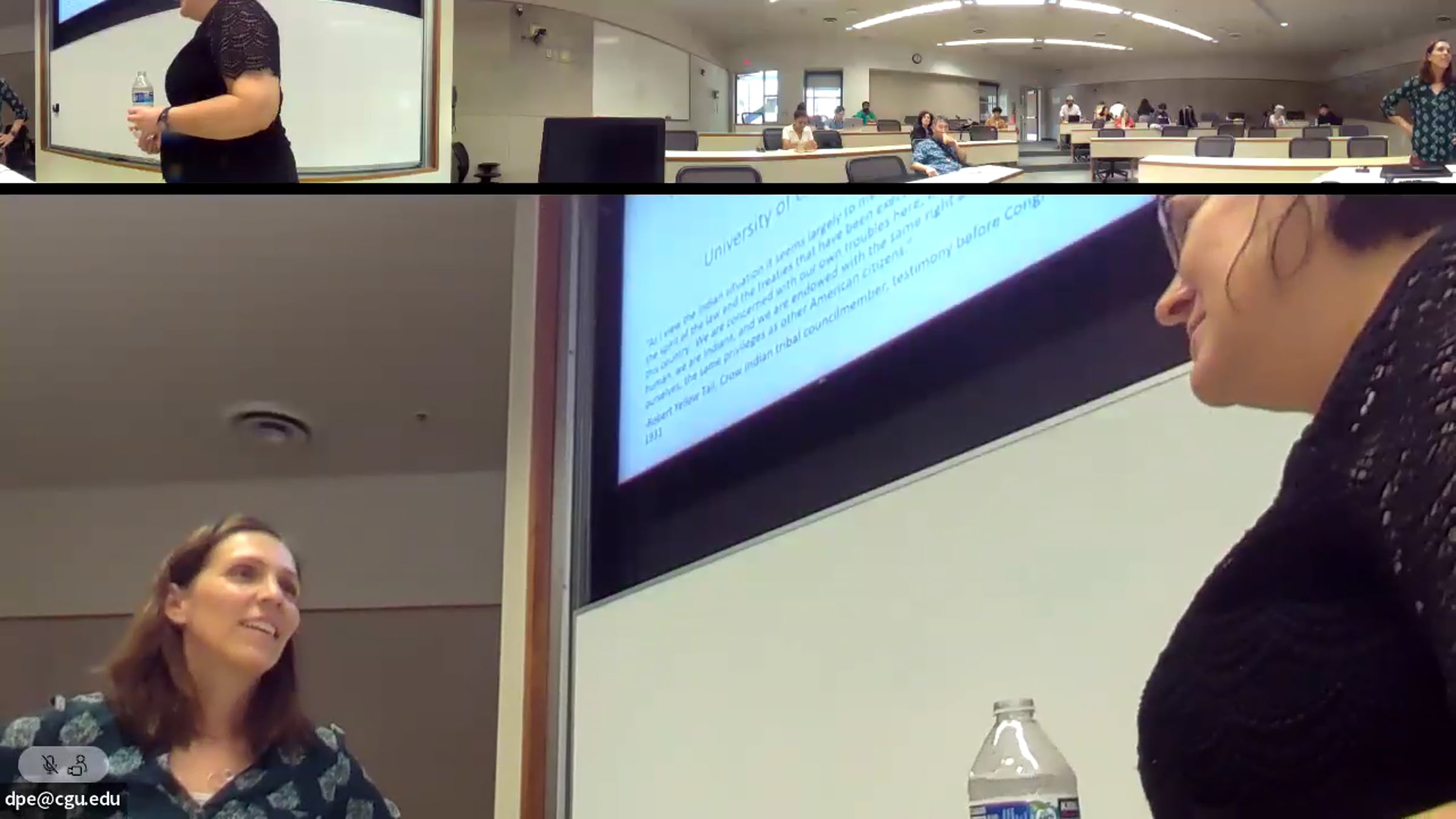
Tuesday Talks - Laura Evans

March 24, 2026
This paper considers the determinants of the political frames used by Native American advocates in their testimony before Congress from 1889 to 1933. I draw on a sample of Congressional hearings where Native American tribal leaders were witnesses, and I explore the relationship between chosen political frames and the types of boarding schools where a tribe’s children had been sent. During most of the 19th century and well into the 20th century, the US government forcibly removed thousands of Native American children from their families and detained them in federal Indian boarding schools. Boarding schools varied tremendously in their organization and operation. Furthermore, most boarding schools were short-lived—schools frequently merged, moved, or shut down, to be replaced by new schools. This paper uses newly-available data to consider the consequences of boarding schools for tribal leaders’ broader communications with federal officials. I draw on the findings of the US Department of Interior’s Federal Indian Boarding School Initiative, which generated detailed profiles of all federal Indian boarding schools in operation from 1819 to 1969.
Get started for free
24/7 customer support
Our customer support team is available to help 24/7. Enterprise members also receive dedicated account managers and a guaranteed uptime SLA.
© 2026 Vimeo.com, Inc. All rights reserved.
TermsPrivacyYour Privacy ChoicesU.S State PrivacyCopyrightCookies