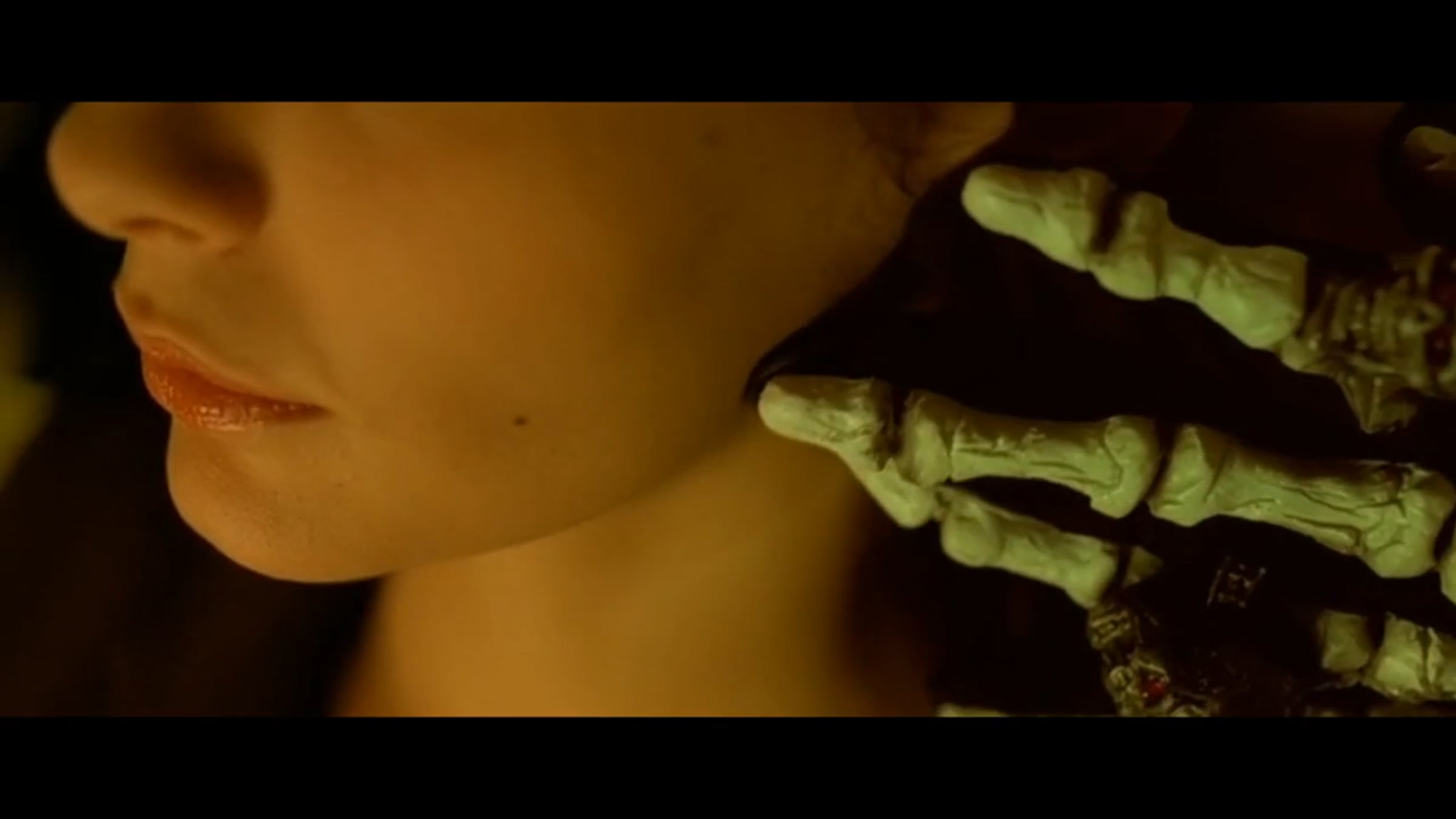
Cinema as Mirror—Face and Close Up

THIS IS FOR EDUCATIONAL PURPOSES ONLY - NOT FOR PROFIT
Parsons School of Design - Cinema Theory & Practice, Silvia Vega-Llona, Spring 2016
The theoretical framework will be based on Thomas Elsaesser’s and Malte Hagener’s Film Theory Through the Senses, which focuses on the way the spectator experiences film through their senses, and traces this appropriation of cinema by its audiences from outer envelope, like window and door, through the inner senses, like touch and the ear, to the brain and mind.
Students will be creating their own video essays and/or short films as part of the class experience and exercise.
In this essay, I chose two movies: Slumdog Millionaire and Amélie Poulain, to compare how directors use faces and close-ups to reveal emotions. The reason I chose these movies, is because though they may seem very different, they encounter a lot of similarities. The plots are somehow parallel: we follow the story of the main character, his childhood and then adulthood, while he tries to find the person he loves. What I really wanted to concentrate on, was the way both directors use a lot of close ups, which creates a certain intimacy with the protagonists. The viewer truly feels like he is living the story, it makes him travel to the other side of the screen. It conveys a lot of emotions, and allow the viewer to take part in the plot that unrolls before his eyes. The distance between the screen and the viewer seems to be gone. On one hand, In Amélie Poulain, Jean-Pierre Jeunet creates a bond between the viewer and Amélie right away, as even before the story begins, we are faced with an intro filled with close ups of little Amélie playing around. On the other hand, we have Slumdog Millionaire, in which Danny Boyle starts with a close up of Jamal, in media res, which puts the viewer straight into the action and pulls us in to find out more. We are drawn to this mysterious boy from the slums, about to become a millionaire.
Overall, my intention was to observe the way two directors used the same technique in two different contexts, to create a very similar feeling and atmosphere. The intimacy created by the closeness of images, leads to the viewer breaking the fourth wall, and becoming the characters.
Get started for free
24/7 customer support
Our customer support team is available to help 24/7. Enterprise members also receive dedicated account managers and a guaranteed uptime SLA.
© 2026 Vimeo.com, Inc. All rights reserved.
TermsPrivacyYour Privacy ChoicesU.S State PrivacyCopyrightCookies