Lynchian Neo-realism: Beyond Dreams and Reality

Throughout his career, David Lynch has crafted a distinctive dark dreamy style that often invites comparisons with surrealism. Yet despite such analogies, the cinema of Lynch forges a new form of realism that closely resembles the Deleuzian crystal-image and its shifting variations. I call this new form Lynchian Neo-realism.
Far from the surreal content and atmosphere of his movies, what marks the singularity of the Lynchian Neo-realism is Lynch’s ability to delicately thread images together according to a loose dream-logic that repeatedly melts the actual and the virtual image – and vice versa – beyond discernibility.
Whereas the surrealist façade of some of Lynch’s flicks – like the avant-garde series Rabbits (2002) – might sometimes obscure the presence of this dream-logic, most of his body of work corresponds to varying shapes of the crystal-image.
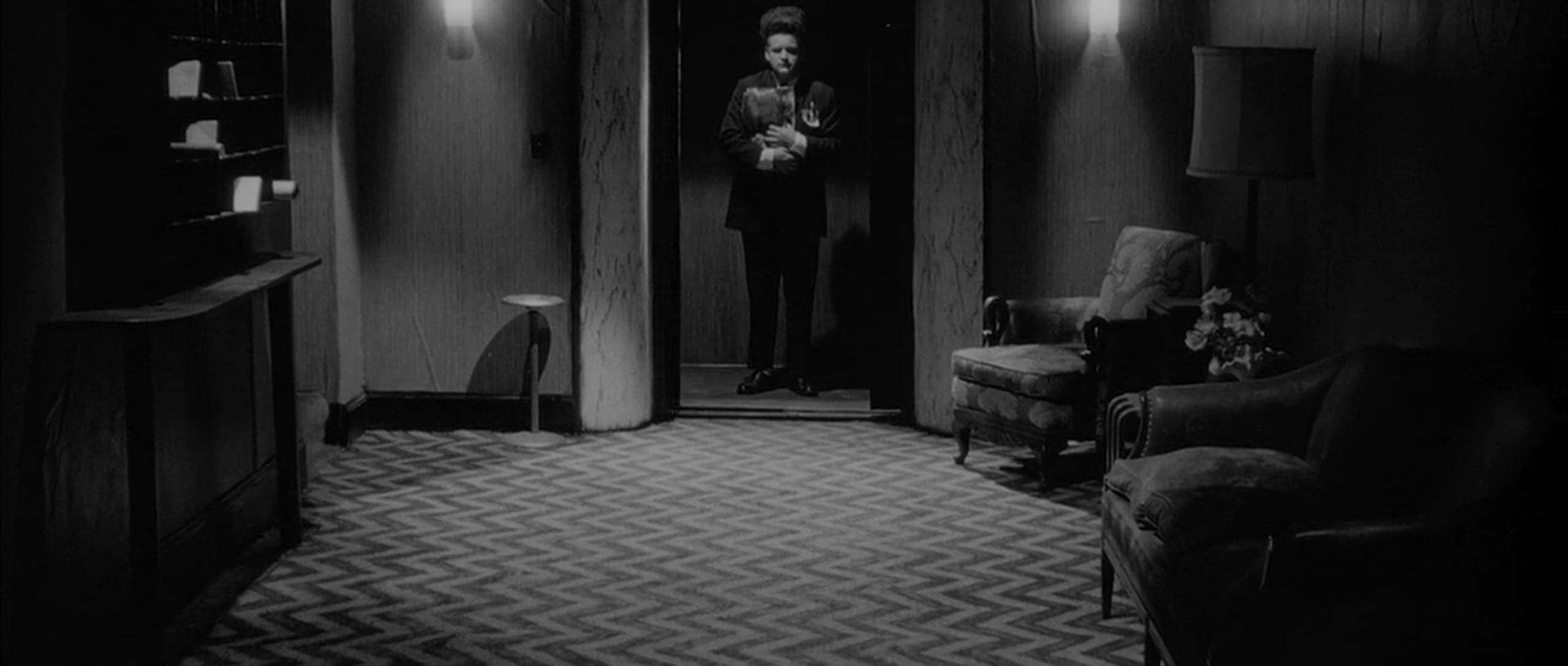
While early Lynchian Neo-realism – like the cult classic Eraserhead (1977) and The Grandmother (1970), which tells the story of a boy that grows a grandmother from a seed – unfolds as a dying seed-image, Lynch’s later fascination with the thematic of doppleganging – notably in Lost Highway (1997) and Mulholland Drive (2001) – gradually transforms his style into a coalescence between the seed-image and the mirror-image.
The dream-logic of the Lynchian Neo-realism culminates in the genesis of two separate but infinitely intertwined dimensions – those of dreams and reality. In Lynchian Neo-realism dreams make reality, but reality is already a dream. In this dream-logic, the story never begins or ends – it only 'becomes'.
Lynchian Neo-realism continuously moves in and out of dreams and reality, leaving only scarce evidence that a shift has even occurred: red curtains, zig-zag stripes and a lot of violently blinking lights.
Disclaimer: Uploaded for educational purposes only. The uploader does not own the rights to any of the images and music used in this video.
Music credit: Angelo Badalamenti – Audrey's Dance (Twin Peaks OST)
Get started for free
24/7 customer support
Our customer support team is available to help 24/7. Enterprise members also receive dedicated account managers and a guaranteed uptime SLA.
© 2026 Vimeo.com, Inc. All rights reserved.
TermsPrivacyYour Privacy ChoicesU.S State PrivacyCopyrightCookies