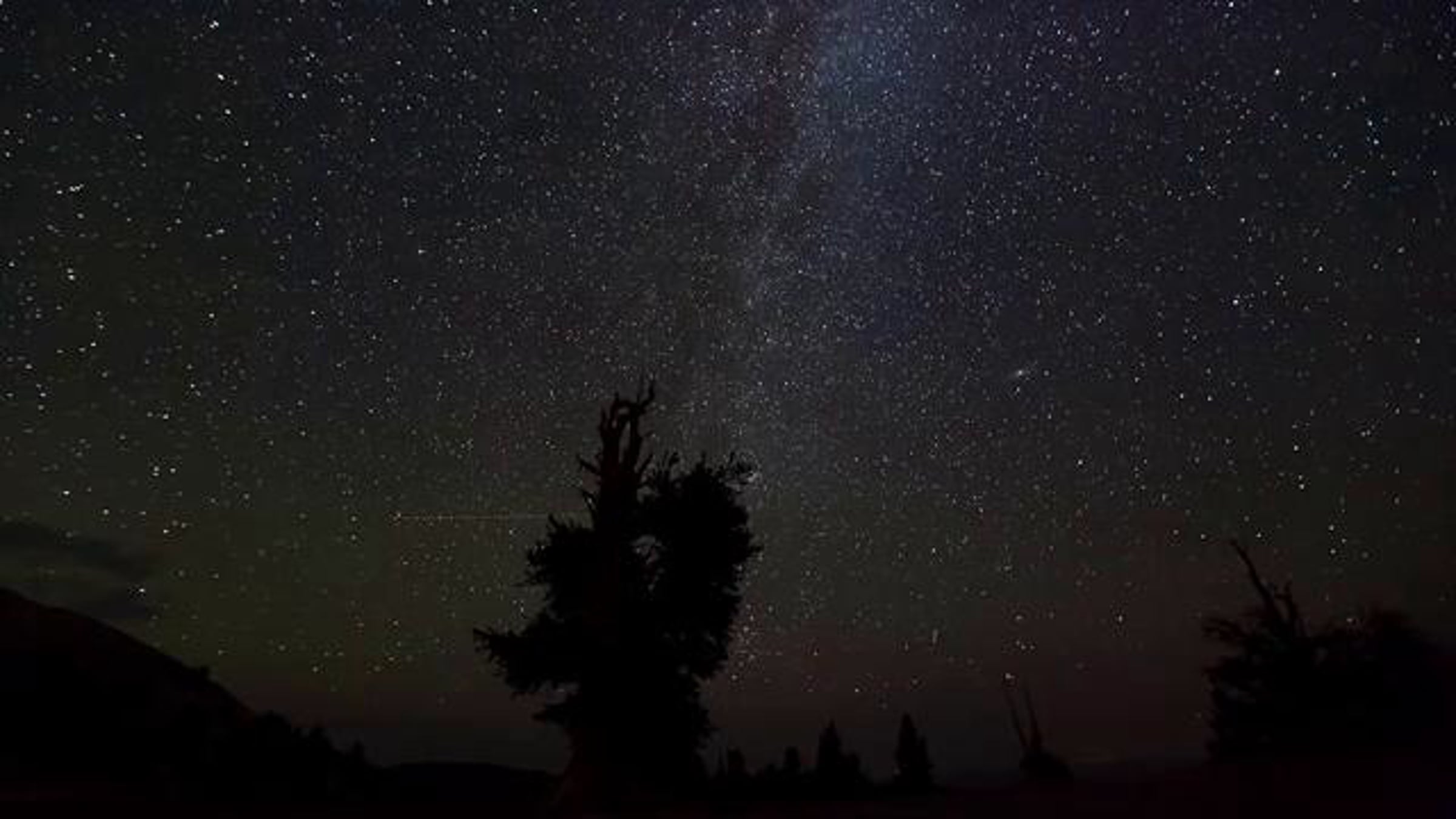
Perseid Meteor Shower Timelapse (HD)

One theory behind how life could spread among the stars is that amino acids and water could arrive on planets via comets, and survive the impact. In this video, debris from the Comet Swift-Tuttle falls to earth as earths oldest living thing, a bristlecone pine, rests under the stars of our Milky Way Galaxy. Debris from the Comet Swift-Tuttle causes the annual Perseid Meteor Shower in early August. Events such as this may be tied to the appearance of life on this planet. I shot this timelapse sequence at an elevation of 10,000 feet in the White Mountains on the California/Nevada border.
More than seventy varieties of amino acids have been found in meteorites, and tests imply that they may withstand impact events:
Hitchhiking Molecules Could Have Survived Fiery Comet Collisions With Earth
universityofcalifornia.edu/news/article/3089
There was a talk recently at U.C. Berkeley on how material from space has influenced life on earth:
Astronomy and Evolution:
From the Death of the Dinosaurs to the Stardust in your Bones
kqed.org/quest/blog/2009/08/15/science-event-pick-stardust-in-our-bones/
The bright star in the left half of the screen that the rest seems to rotate around (that we rotate under) is the North Star. The bright object which rises orange on the right side behind the smoke smoke from Summer 2009 forest fires is the moon.
A draft version of this video was featured on Discover Magazine's blog: blogs.discovermagazine.com/badastronomy/2009/08/25/perseids-writ-large/
Get started for free
24/7 customer support
Our customer support team is available to help 24/7. Enterprise members also receive dedicated account managers and a guaranteed uptime SLA.
© 2026 Vimeo.com, Inc. All rights reserved.
TermsPrivacyYour Privacy ChoicesU.S State PrivacyCopyrightCookies