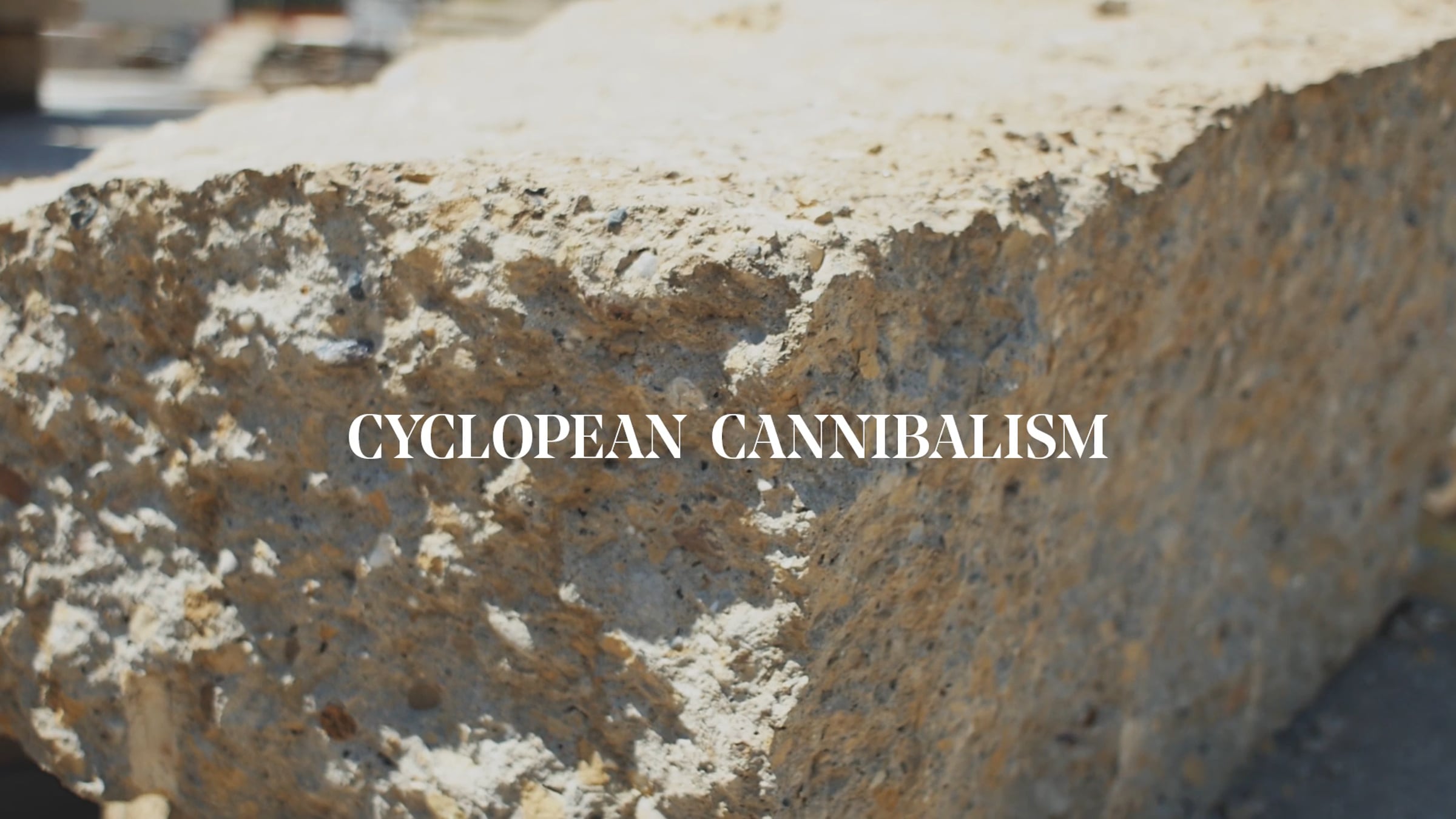
Cyclopean Cannibalism

Cyclops is described in Hesiod’s Theogony as a race of giants, known for constructing massive stone walls. Cyclopean masonry consists of massive stones fit precisely together, despite their diverse sizes and shapes. Their assembly is so dramatic that conjures myths of giants. Of the numerous civilizations that produced these megalithic stone works, the Inka constructed without a preconceived design. This architecture emerged through a sequential logic informed by the constraints of resources. The Inka stone works were computed. When materials were scarce, stones were re-adapted into new works. They consumed their own cities!
In today’s urban context, we generate unprecedented quantities of waste. There is an impending crisis hinging on how we deal with this debris, specifically from buildings. In order to more intelligently reconsider the existing building stock, the profession could learn a great deal from cyclopean constructors. These methods force us to relinquish pre-determined design composition in exchange for a systemic, intelligence design, capable of responding to unknown conditions. Cyclopean Cannibalism deciphers the Inka method and translates it into a possible contemporary method. Future cities demand a creative cannibalization of their accumulating debris and stagnating structures. Can urbanism of the near future be re-imaged as architecturally self-sustaining? Can our future cities digest themselves?
Get started for free
24/7 customer support
Our customer support team is available to help 24/7. Enterprise members also receive dedicated account managers and a guaranteed uptime SLA.
© 2026 Vimeo.com, Inc. All rights reserved.
TermsPrivacyYour Privacy ChoicesU.S State PrivacyCopyrightCookies