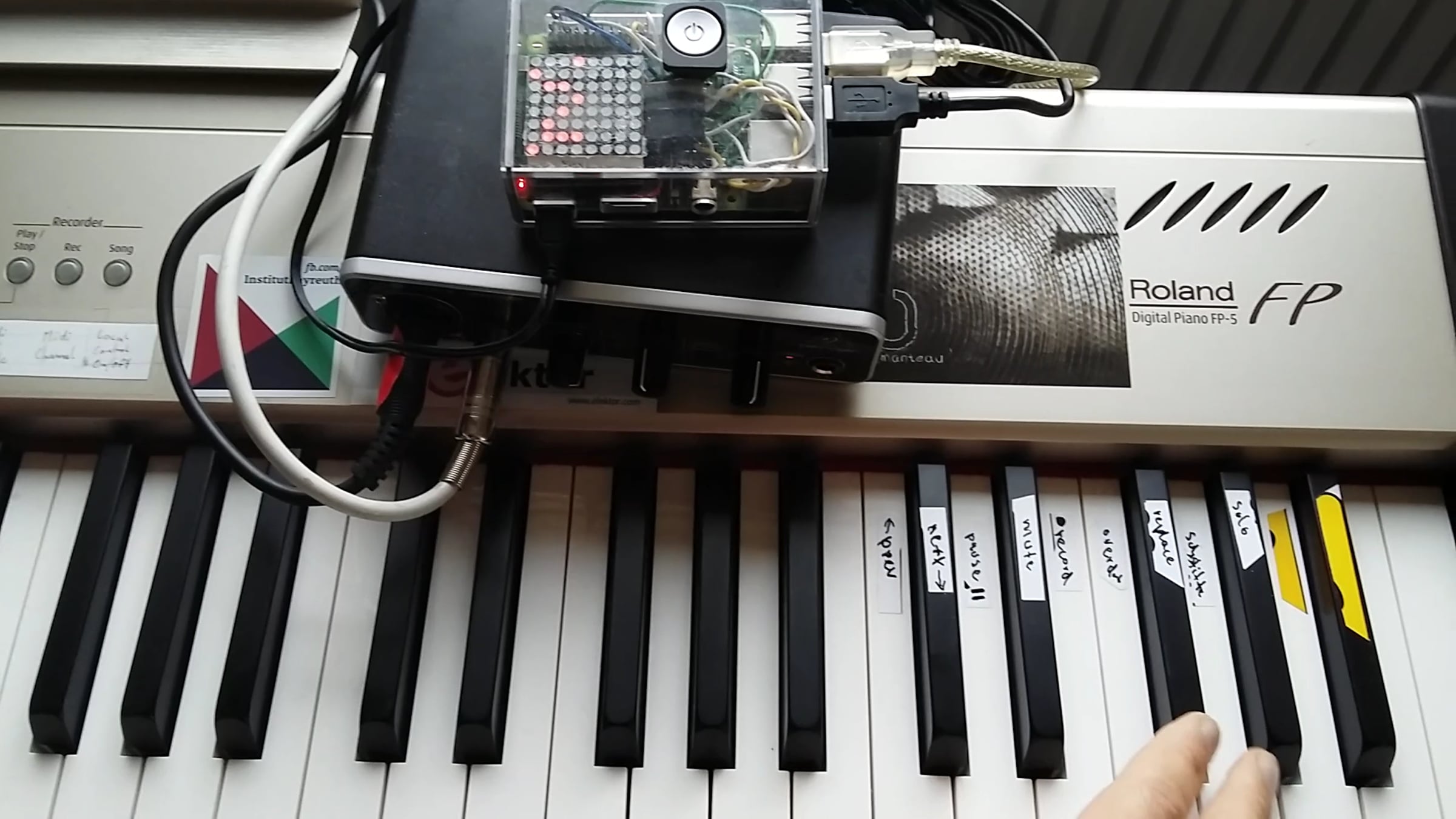
HoerspielPi demo 1

[NOTE: This video will be replaced by a better one soon.]
This video is intended to show the current state of my project 'HoerspielPi' (means 'RadioplayPi').
http://wiki.fablab-bayreuth.de/projekte:hoerspielpi
I would like to use it one day to make a neat live radioplay, where ambient noise is made by overdubbing loops.
*I have not practised playing piano for quite a while, please excuse my horrible touch in this video.*
Software:
* headless Raspbian
* jack2
* sooperlooper engine http://essej.net/sooperlooper/
* sooperloooper GUI python script, to display on 8x8 led matrix (written by me)
* a mididings script, to split the midi messages piano into ranges
* a script to listen for a very long keypress, to launch a midi learner mode (written by me)
* an python script, to emulate CC messages, by in-/decrementing the value with piano key presses (this is used for the record threshold at the moment) (written by me)
* a python script to put an interrupt, to shutdown when the button is pressed
* a script which displays simple splash animations on boot and shutdown
The whole thing is set up as a (crude, but works for me) debian package, which will install all the systemd services, a make hoerspielpi the default target, give jackd the appropriate dbus rights, enable SPI, make some performance settings, put a default midi binding, etc.
hardware:
* Raspberry Pi 3 B
* a 8x8 matrix of red leds, with max7219 driver, connected via SPI
* a button (broken out of an old PC), connected between Pin 5 and GND, to allow switching the Pi on and off properly.
* a cheap USB soundcard
* a simple mixer, to feed mics or instruments into the soundcard which has just 1 line input
* an electronic piano, connected via USB-MIDI to the Pi.
at the moment it lacks:
* visualisation of many sooperlooper settings, like the whole sync machinery
* control of the sync machinery
Get started for free
24/7 customer support
Our customer support team is available to help 24/7. Enterprise members also receive dedicated account managers and a guaranteed uptime SLA.
© 2026 Vimeo.com, Inc. All rights reserved.
TermsPrivacyYour Privacy ChoicesU.S State PrivacyCopyrightCookies