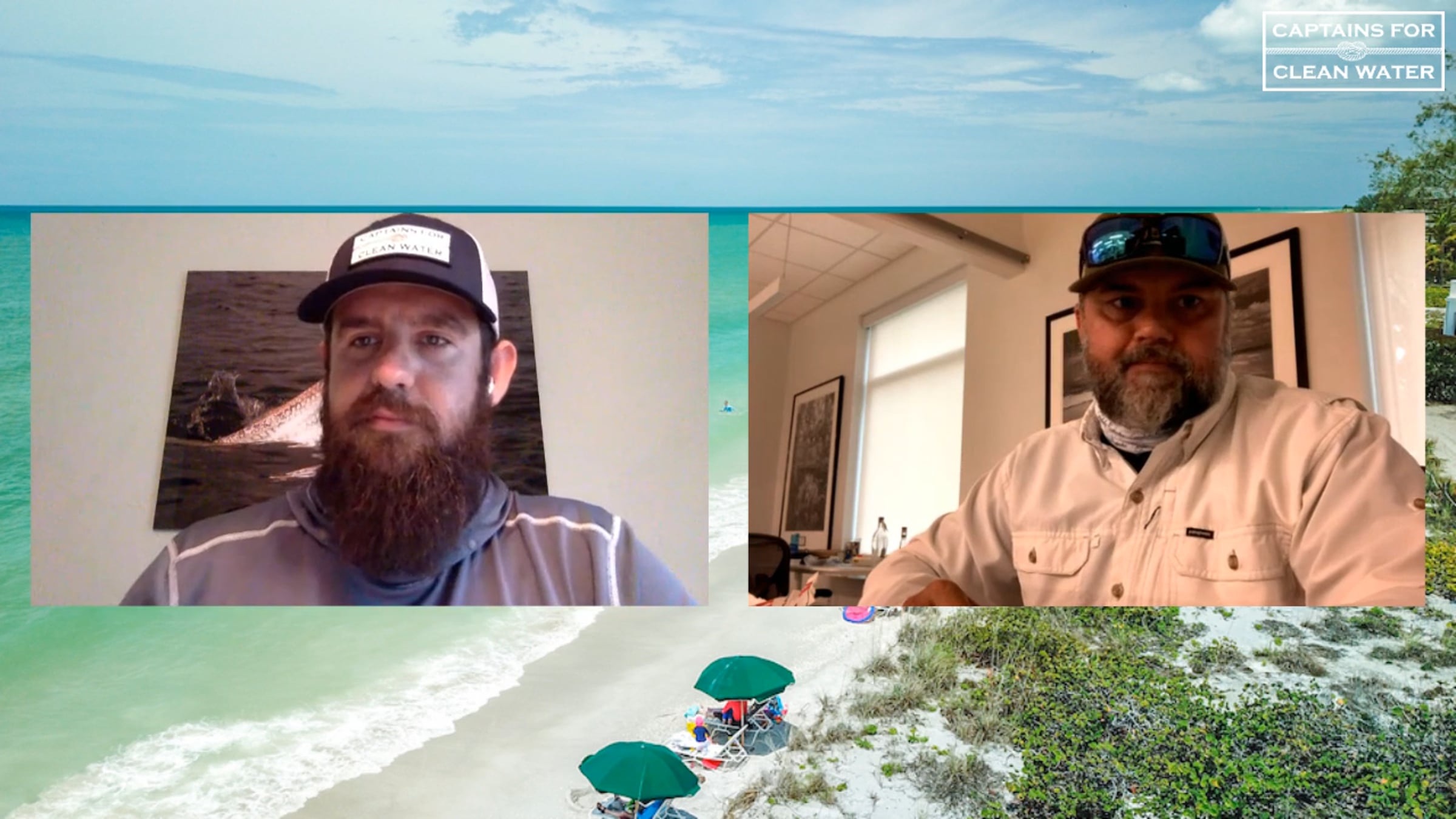
The latest update with Capt. Daniel Andrews and Capt. Chris Wittman

Capt. Daniel Andrews and Capt. Chris Wittman discuss the latest issues including Lake Okeechobee levels and operations, saving clause, storage treatment areas, continuing the fight for water quality, and other issues around the state.
Recorded June 4th, 2020
Lake Okeechobee Levels
With the recent increase in rain, lake levels have risen from 10.5 ft to 11.5 ft. Managing the lake at lower levels allows for the capacity for excess water from rain or hurricanes, and avoids high-volume discharges to the Caloosahatchee and St. Lucie estuaries.
Historically, before the Herbert Hoover Dike, the lake would expand outwards when there was excess water and then would overflow and slowly trickle south. Today, with the dike and barriers south, water levels can only move vertically unless water managers send it east, west or south.
Storage Treatment Areas
Storage Treatment Areas or STAs are constructed wetlands that remove and store nutrients from water. Current STAs remove excess nutrients from agricultural runoff water and, in some cases, runoff from urban tributaries, before discharging it south into the Everglades and other natural areas. STAs are critical in cleaning water, so it can be sent south into the Everglades and eventually Florida Bay without damaging those ecosystems.
Continuing the Fight
Water quality is a marathon. Once progress has been seen and we are seeing our water cleaner than ever, it is important to not lose focus and keep pushing for Everglades restoration and longterm solutions. Continued pressure from the public, staying educated on the issues, and using your voice to spread the message is the most important action you can take to help advance progress.
Savings Clause
The savings clause is a piece of legislation that is being proposed to be included in the Water Resources Development Act (WRDA) of 2020.
The proposed language would connect the new Lake Okeechobee Regulation Schedule (LORS) to the “savings clause” within the Comprehensive Everglades Restoration Plan (CERP).
The savings clause analysis applies only to projects implemented under WRDA 2000, specifically under the authorization of the Comprehensive Everglades Restoration Plan (CERP). The analysis is designed to ensure that—as Everglades restoration projects are activated and ecosystem benefits are delivered to the Everglades—water users are protected.
The Lake Okeechobee Regulation Schedule (LORS) is not a CERP project and should not be subject to the CERP authorizing language. The proposed language would permanently lock in consumptive water uses that were in place in December 2000 for this and all future Lake Okeechobee operational changes without taking into account dam safety, toxic blue-green algae, climate change, and the state’s inherent ability to allocate water for non-CERP projects and components.
In other words—Lake Okeechobee management decisions would be based upon the needs of special interests. It would prioritize irrigation supply for corporate agriculture over drinking water supply, human health and safety, and the environment, resulting in more polluted discharges, more toxic algae blooms, and less water to the already-suffering Everglades and Florida Bay.
To learn more about this issue visit: https://captainsforcleanwater.org/special-interests-attempt-to-reconfigure-lake-o-schedule-to-their-benefit/
Get started for free
24/7 customer support
Our customer support team is available to help 24/7. Enterprise members also receive dedicated account managers and a guaranteed uptime SLA.
© 2026 Vimeo.com, Inc. All rights reserved.
TermsPrivacyYour Privacy ChoicesU.S State PrivacyCopyrightCookies