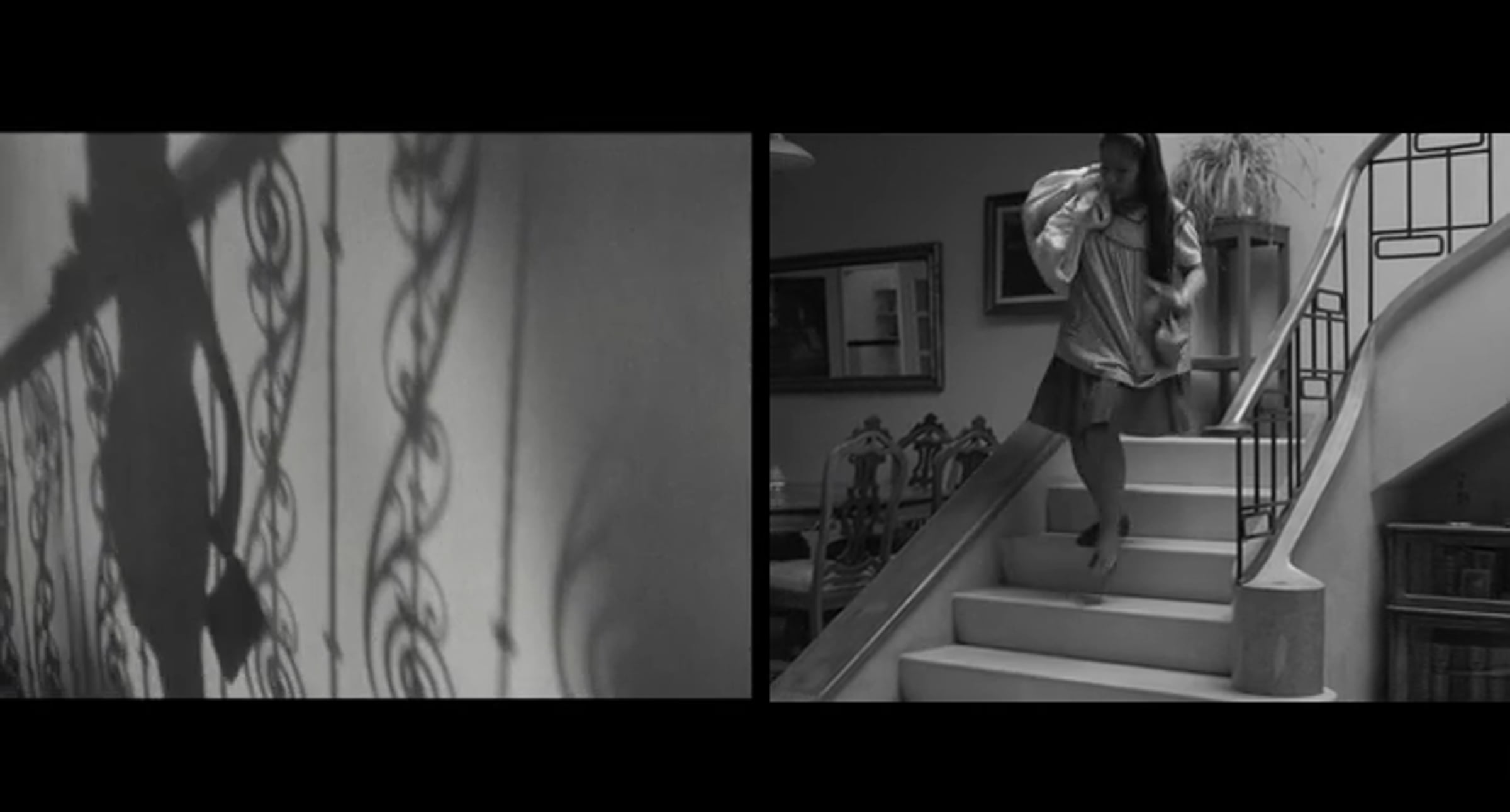
What is an Accented Videoessay? Who has the authority to speak?

Is English narration with an accent a concession (an act of consideration towards the monolingual English speaker spectator), or rather a gesture of submission towards the language of the empire? This work puts into dialogue Kogonada's seminal videoessay "What is Neorealism?" with his more recent "Nothing at Stake" on the seemingly meaningless character of Cleo in Cuarón's _Roma_ as a way to reflect upon authority and power relations in language, about the voiceover with an "accent", and the voice of the Other in cinema (Hollywood vs. "accented" cinema -see Julio Garcia Espinosa). While Kogonada's video-essay on Neorealism used a male voiceover, his more recent video-essay on Roma is narrated by a female voice —in English. In my video-essay I enact a series of displacements: Kogonada's standard English is displaced by my accented voiceover (English with Italian accent). In turn my English narration is displaced by the narration in my Italian tongue, followed by a female Spanish voice from Mexico, and by Mixteco from Yucuquimi and Eastern Chatino. All these voices repeat in different languages the same sentence: "her steps matters, her voice too". Which one has more authority to talk about Cleo?
Get started for free
24/7 customer support
Our customer support team is available to help 24/7. Enterprise members also receive dedicated account managers and a guaranteed uptime SLA.
© 2026 Vimeo.com, Inc. All rights reserved.
TermsPrivacyYour Privacy ChoicesU.S State PrivacyCopyrightCookies