Cellular Proteostasis - D. Allan Drummond, University of Chicago

How Cellular Infidelity and Evolution Shape Protein Misfolding
D. Allan Drummond, University of Chicago
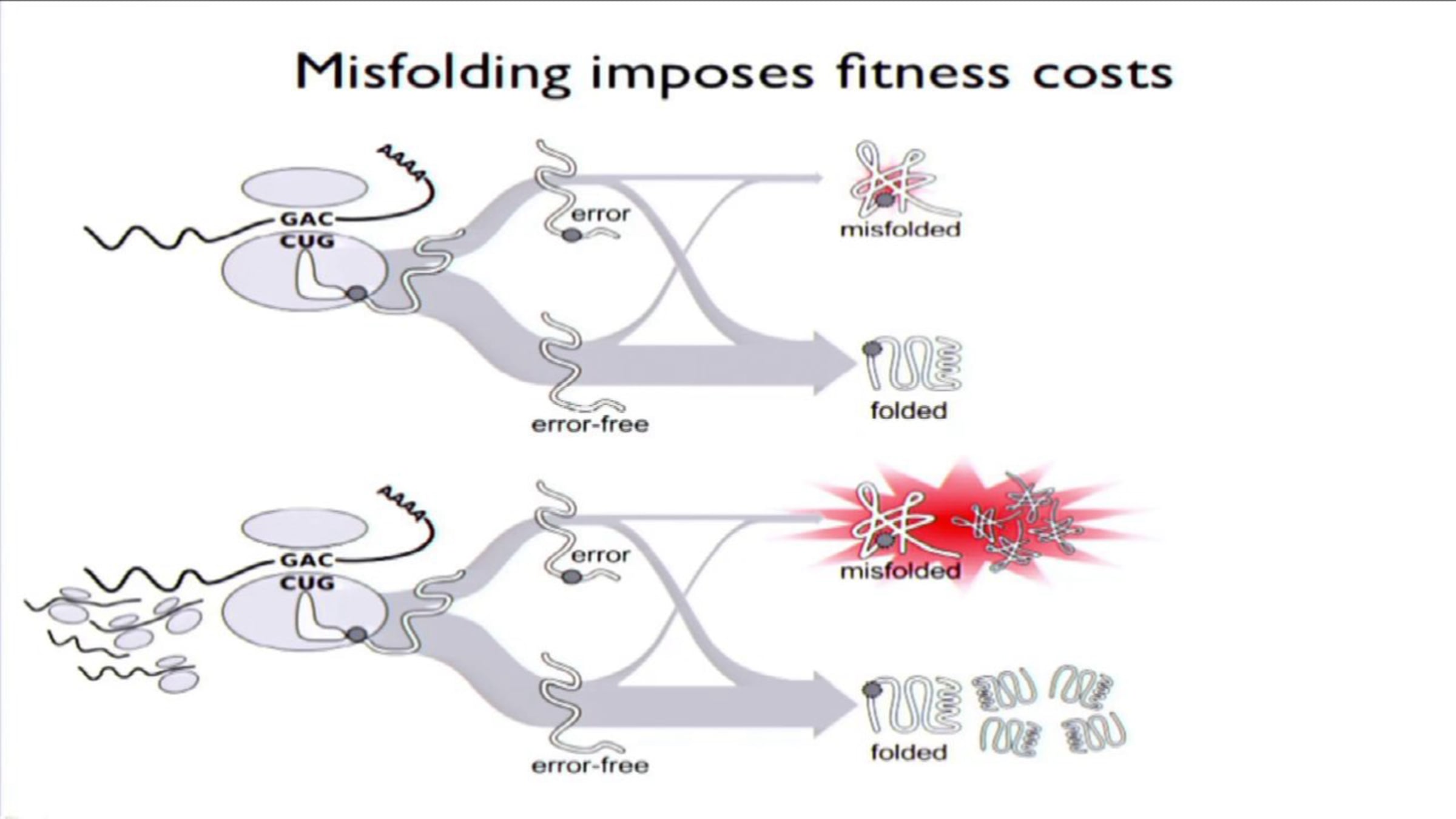
Most proteins fold into biologically active three-dimensional conformations dictated by their amino-acid sequences. Ribosomes, the machines which translate protein sequences from genetic information, are startlingly error-prone, such that one in five average-length proteins are predicted to contain at least one mistake. Misfolding produces toxic molecular species which are associated with, and likely cause, a wide range of human neurodegenerative diseases. Over longer timescales, such costly misfolding should be a target for natural selection, favoring protein sequences which have a propensity to fold properly. The cellular costs of misfolding, and therefore the strength of selection, should rise with protein abundance, hinting at powerful links between the fidelity of translation, robustness of protein folding, levels of protein expression, and evolutionary constraints on protein-coding sequences. We are developing high-throughput methods for examining errors in protein synthesis and protein folding at the cellular scale. For example, many soluble proteins form insoluble aggregates upon misfolding. Assaying protein aggregation in budding yeast reveals that proteins expressed at higher levels show sharply reduced aggregation, consistent with strong evolutionary pressure against misfolding. What proportion of proteins misfold due to errors, and do error rates differ between proteins? Why are misfolded proteins toxic, and how do cells recognize them when they occur? How do certain proteins become less prone to misfolding over evolutionary time, and can we develop therapies which mimic this process for disease-associated proteins? Our work raises new questions and points to new ways forward in understanding protein homeostasis.
Background Review Article:
Reynaud, E. (2010) Protein Misfolding and Degenerative Diseases. Nature Education 3(9):28
Get started for free
24/7 customer support
Our customer support team is available to help 24/7. Enterprise members also receive dedicated account managers and a guaranteed uptime SLA.
© 2026 Vimeo.com, Inc. All rights reserved.
TermsPrivacyYour Privacy ChoicesU.S State PrivacyCopyrightCookies