Research Seminar with Amanda Hilliam

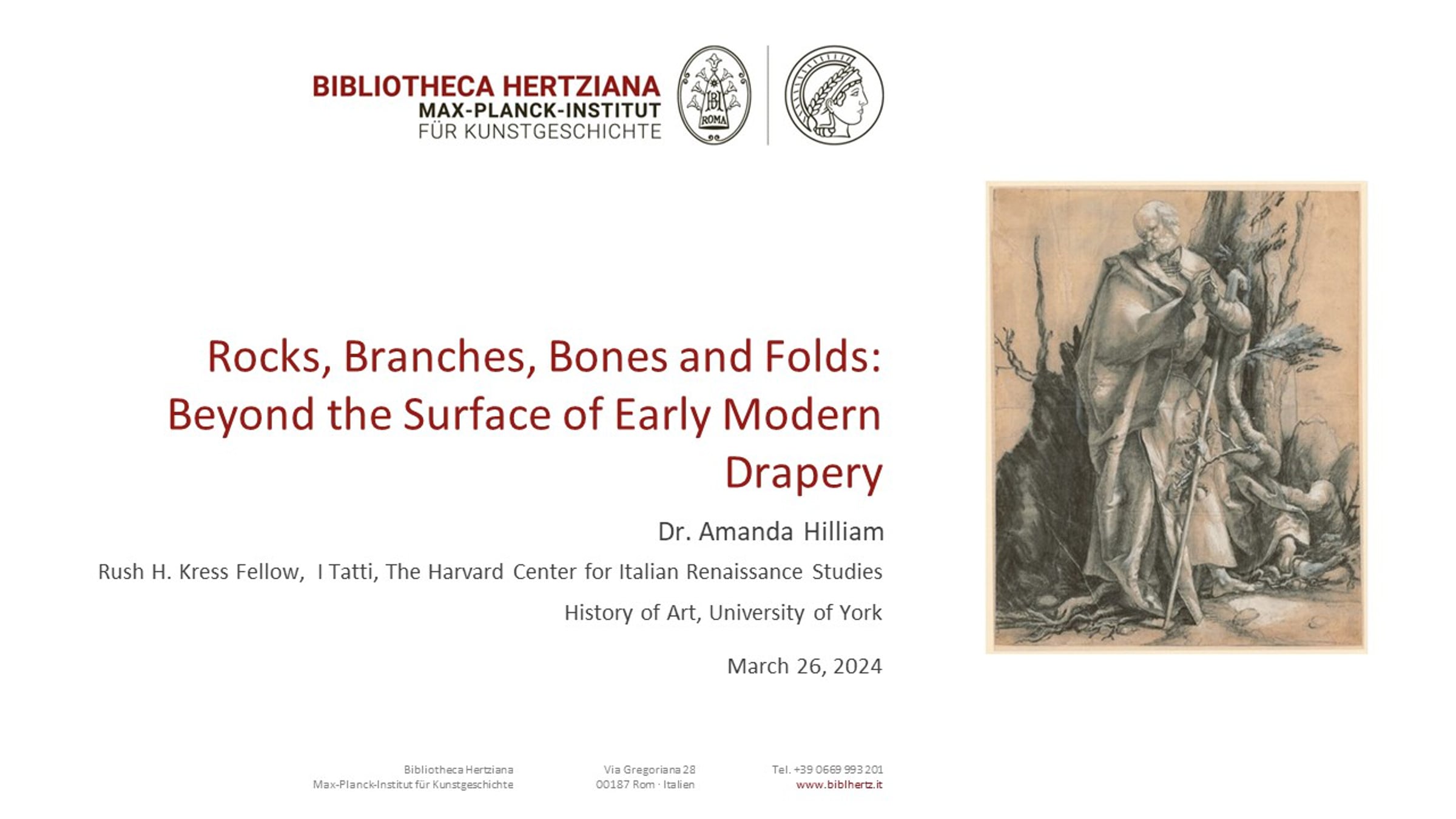
Rocks, Branches, Bones and Folds: Beyond the Surface of Early Modern Drapery
Drapery – characterised by its folds and by its relationship to the human body – emerged as a distinct visual element in the practice and theory of early modern art. As this seminar demonstrates, drapery was highly malleable both in its form and in its capacity to take on meaning in the visual realm, and was thus a particular representational challenge for the artist, as well as a site of expression and virtuosity. Reflecting on the significance of drapery in the early modern period and in the later historiography, as well as in the discipline of art history today, this seminar proposes that drapery as a textile surface is a way of knowing about how artists conceptualised the making process – particularly in relation to forms of generation in nature – as well as about the poetics of materials, visual metaphor, connections between art, science and philosophy, and the boundary between art and material culture.
Get started for free
24/7 customer support
Our customer support team is available to help 24/7. Enterprise members also receive dedicated account managers and a guaranteed uptime SLA.
© 2026 Vimeo.com, Inc. All rights reserved.
TermsPrivacyYour Privacy ChoicesU.S State PrivacyCopyrightCookies