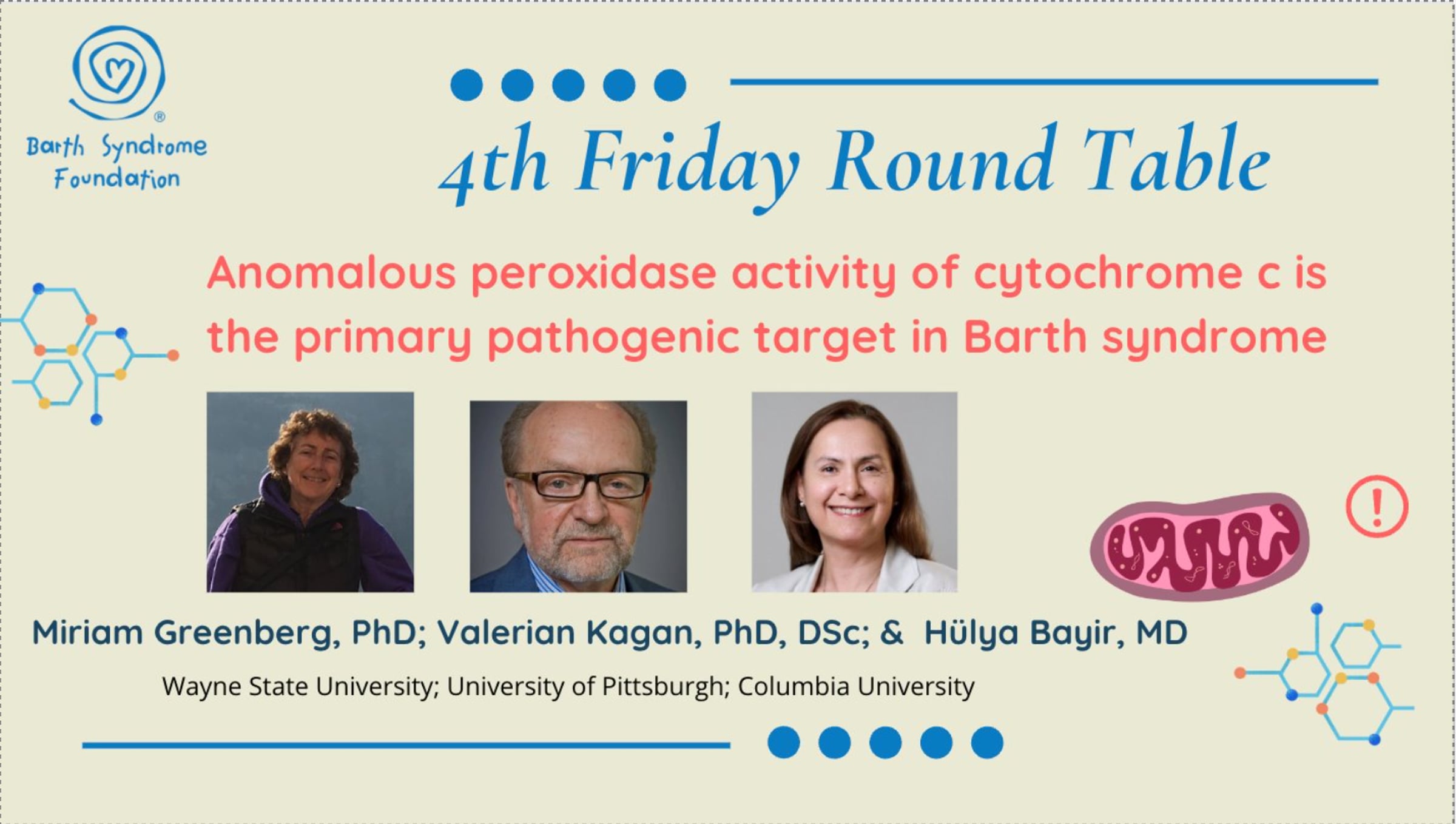
Friday Round Table 26-Apr-2024

Anomalous Peroxidase Activity of Cytochorme C Is the Primary Pathogenic Target in Barth Syndrome: Miriam Greenberg, PhD; Valerian Kagan, PhD, DSC; Hulya Bayir, MD
For the first time, researchers have demonstrated that high levels of the cardiolipin precursor, mono-lyso-cardiolipin, that result from loss of TAFAZZIN lead to dysfunctional organization of the mitochondrial lipid membrane and drive an abnormal interaction of mono-lyso- cardiolipin with cytochrome c. This interaction causes cytochrome c to generate toxic lipid products that lead to reduced energy production and other mitochondrial dysfunctions. Imidazole oleic acid, a compound that blocks the toxic activities of cytochrome c, can lead to improvements in fatigue in a fruit fly model of Barth syndrome. In future studies, the authors will try to identify the most effective inhibitors of the peroxidation driven by cytochrome c and test them in a mouse model of Barth syndrome. These future studies have the potential to generate a new class of therapeutics for the treatment of Barth syndrome.
Get started for free
24/7 customer support
Our customer support team is available to help 24/7. Enterprise members also receive dedicated account managers and a guaranteed uptime SLA.
© 2026 Vimeo.com, Inc. All rights reserved.
TermsPrivacyYour Privacy ChoicesU.S State PrivacyCopyrightCookies