Lanterns | Rhythmanalysis

Lighting and Rhythm
https://lightingrhythm.weebly.com
Gesturally and proximity-animated lighting transduces collective human activity to lightfield without tokenization via "semantic" models, without machine learning. Yet these lighting systems are can be animated intentionally expressively, in rehearsed, or in incidental (accidental), ad hoc ways. No script is necessary. To animate lights according to a script, human players can rehearse the script and then "play" the system as deterministically as desired. We don't need machine learning the scale of human intention to play or to perform stories.
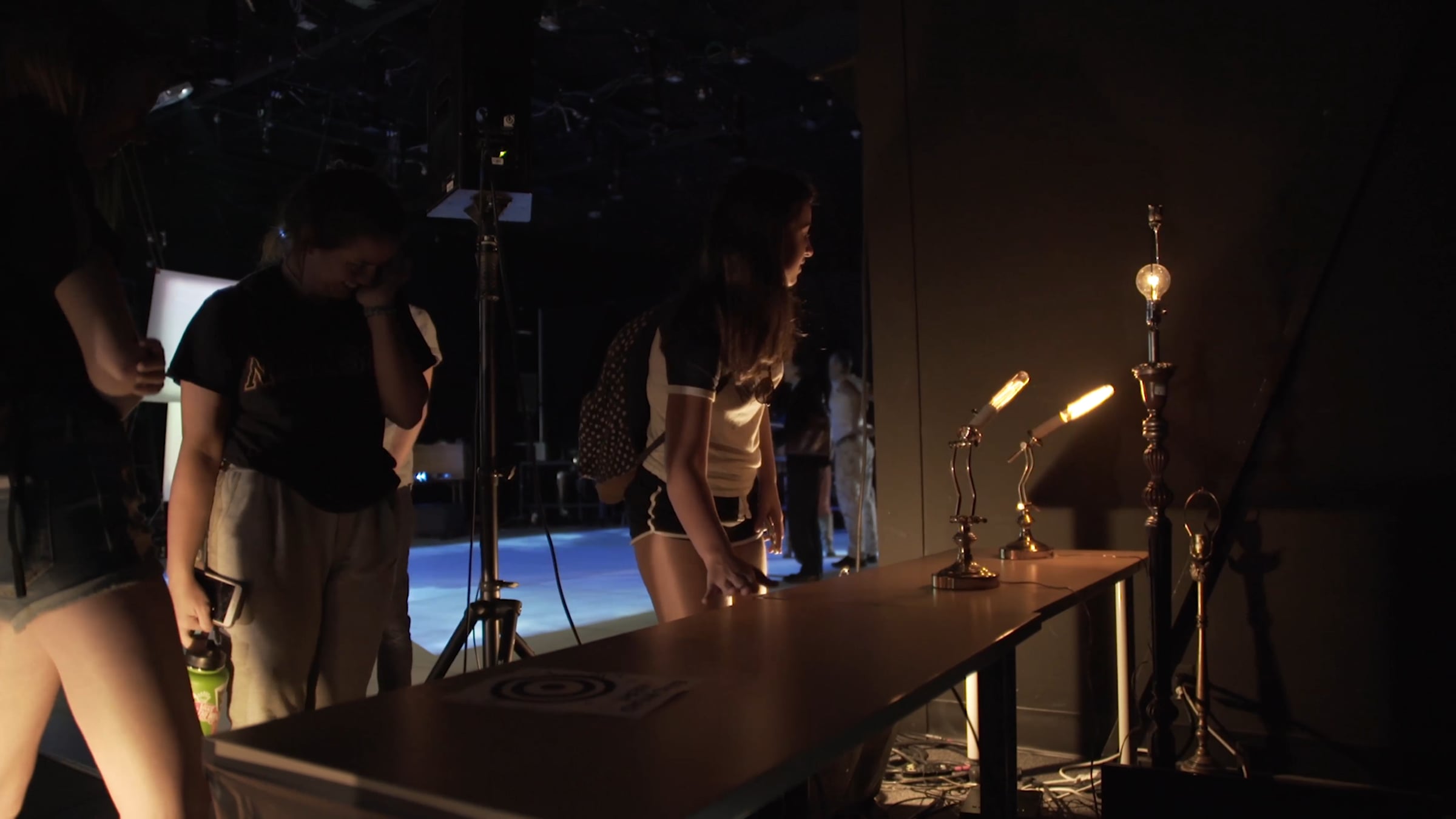
Alexia Klein, Pete Weisman: animated table lamps;
Ben Nandin: Tablesynth, sound transducers, MSP instruments, voiced tables;
Connor Rawls: proximity lanterns;
(To be included:
Walking Lights, Omar Faleh, (2014)
“Walking pattern” in Forest2 lightfield (Chris Ziegler) perturbed by movement of visitor.
Sentient Lanterns, Garrett Johnson (2017)
https://vimeo.com/synthesiscenter/sentientlanterns
Study of interacting dynamical systems: pendulums, lighting and sound instruments (Max),
Tablesynth Lanterns, Ben Nandin, Connor Rawls (2018)
Table animated as percussive instruments via sound transducers and sound synthesis (Max/MSP)
Cosmos (Gorillaz), Ziegler / Rawls (2018-2019)
music-driven and music-tinted kinetic LED constellation
Bongo, Andrew Robinson (2019)
Mapping live percussive gesture extending of bongo to theater-scale lighting in the iStage.
)
Get started for free
24/7 customer support
Our customer support team is available to help 24/7. Enterprise members also receive dedicated account managers and a guaranteed uptime SLA.
© 2026 Vimeo.com, Inc. All rights reserved.
TermsPrivacyYour Privacy ChoicesU.S State PrivacyCopyrightCookies